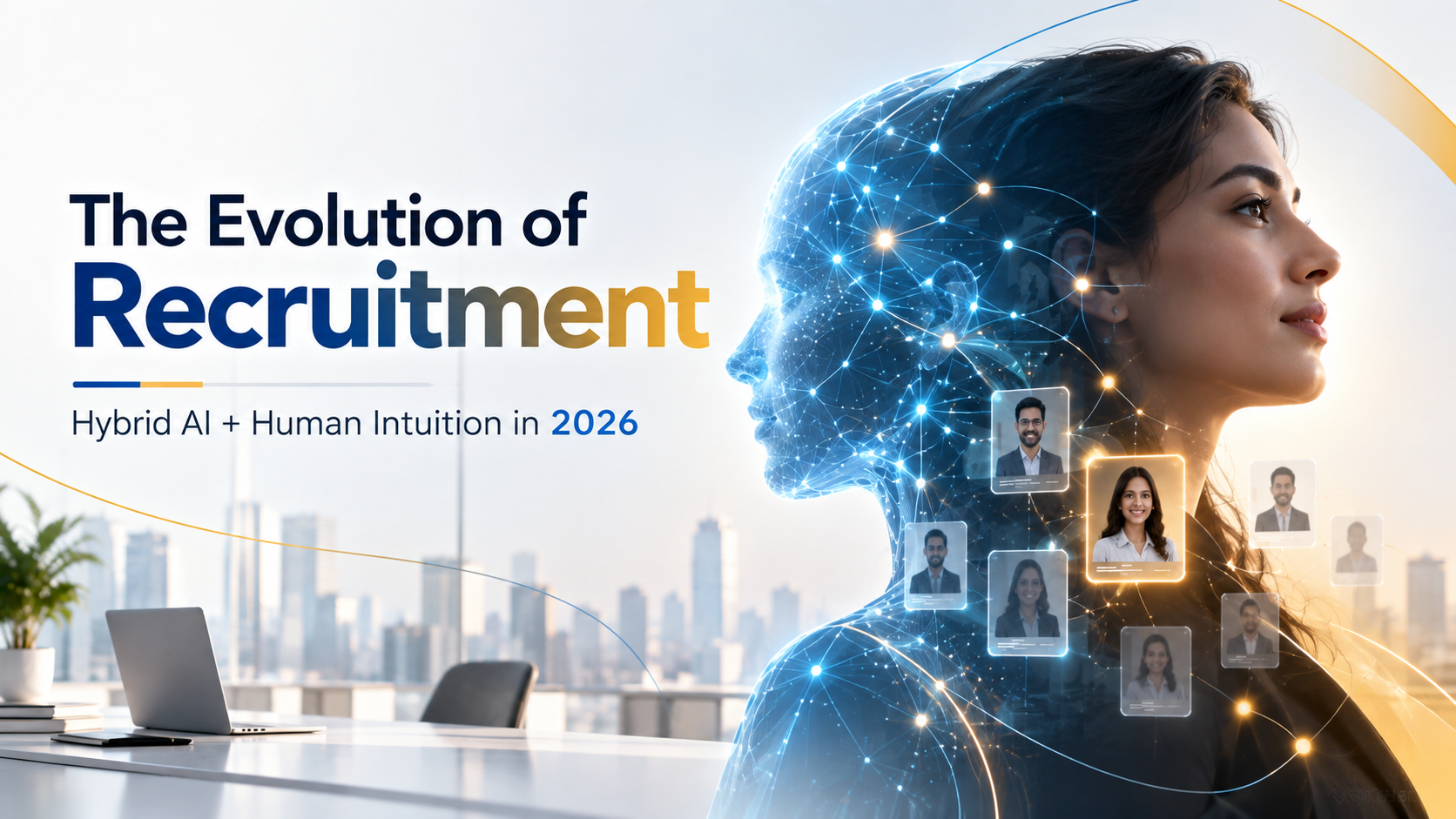
The Evolution of Recruitment: Why 2026 Belongs to Hybrid AI + Human Intuition Headhunting
By Jobs Territory | Thought Leadership Series
Over the past three years, the recruitment industry was caught in an aggressive race to automate everything. From generative AI job descriptions and automated resume parsing to autonomous initial screening bots, the promise was straightforward: faster, cheaper, fully automated hiring.
Yet as we navigate 2026, Talent Acquisition leaders and executive search teams are realizing an undeniable reality:
Hiring speed without human discernment is just bad hiring done faster.
While algorithms can process thousands of candidate profiles in seconds, they cannot read between the lines of a career trajectory, gauge real cultural chemistry, or persuade a passive industry leader to consider a strategic career move.
The future of talent acquisition does not belong to pure automation—nor does it belong to legacy, manual recruitment methods. 2026 belongs to the hybrid model: AI-powered talent intelligence anchored by human intuition and strategic headhunting.
1. The Paradox of Automation: "Synthetic Volume" vs. True Quality
The widespread adoption of AI tools has reshaped candidate behavior. Candidates now use generative AI to tailor resumes and auto-apply to hundreds of openings simultaneously. The result for TA leaders? An unprecedented deluge of polished, keyword-optimized applications that look flawless on screen but often fall flat in real-world technical or leadership assessments.
When algorithms screen against algorithms, recruitment becomes transactional noise. Automated keyword filters frequently miss non-linear career trajectories, high-potential problem solvers, and niche leaders who don’t fit standardized data points.
2. What AI Does Exceptionally Well (The Intelligent Co-Pilot)
Technology-enabled recruitment is essential for scale, market mapping, and predictive analysis. In high-performing recruitment functions today, AI operates as the ultimate co-pilot:
- Predictive Talent Mapping: Analyzing industry shifts, startup funding cycles, and organizational restructuring to identify talent pools before they hit the open job market.
- Deep Talent Discovery: Uncovering hidden patterns across professional footprints, open-source contributions, patents, and portfolio projects that traditional search strings overlook.
- Eliminating Administrative Drag: Streamlining scheduling, data hygiene, compliance, and preliminary skill validation, freeing recruiters to spend their hours on strategic engagement.
AI handles the volume, structure, and computational complexity of modern hiring.
3. The Irreplaceable Moat: Human Intuition in High-Stakes Headhunting
While machines process data, humans understand people. When it comes to executive leadership, critical specialized hires, and organizational culture, human intuition remains the decisive factor:
- Decoding Non-Verbal Context & Motivations: A machine cannot gauge subtle hesitation when discussing compensation, evaluate genuine leadership presence under pressure, or uncover the unspoken career ambitions of a passive candidate.
- Navigating Cultural & Team Nuances: A candidate might possess the exact technical stack required, but will they thrive in an early-stage high-ambiguity startup or a structured enterprise undergoing digital transformation? Human headhunters calibrate for adaptability, grit, and emotional intelligence.
- The Art of the Strategic Pitch: Top-tier candidates (the top 5% who drive 80% of business impact) are rarely actively looking for work. Closing these candidates requires trust, relationship equity, and nuanced advisory—qualities an automated outreach sequence cannot replicate.
4. The 2026 Blueprint: What TA Leaders Must Prioritize
To build a resilient hiring engine that outpaces the market, organizations must integrate technology with authentic talent partnership:
- Shift from "Resume Filtering" to "Contextual Evaluation": Use AI for rapid shortlisting, but invest human hours into deep scenario-based evaluations and motivational alignment.
- Empower Recruiters as Strategic Talent Advisors: Train your talent acquisition teams to move beyond tactical sourcing. In an AI-augmented environment, the most valuable recruiter skills are negotiation, employer brand storytelling, and organizational consulting.
- Select Partners Who Balance Tech with Headhunting Craft: Work with recruitment and headhunting partners who leverage cutting-edge sourcing tech while deploying seasoned search specialists who understand industry verticals inside out.
Looking Ahead
Recruitment has never been purely an engineering challenge; it is fundamentally a human relationship discipline powered by market insights. As technology continues to evolve, the organizations that win the war for top talent will not be those that replace human recruiters with algorithms, but those that empower human recruiters with the best technology available.
About Jobs Territory: Where Technology Meets Human Headhunting
At Jobs Territory, we bridge this exact gap. We leverage advanced talent-mapping technology and analytics to source at speed, while our seasoned talent consultants apply deep industry intuition, cultural screening, and personalized headhunting to close high-impact roles.
Whether you are scaling high-performance engineering teams, building out sales engines, or securing executive leadership, we ensure you hire the right people—not just matching resumes.
📩 Partner With Us
Looking to build or scale your dream team in 2026? Let's connect:
- For Client & Hiring Inquiries: careers@jobsterritory.com
- Official Website: www.jobsterritory.com
- LinkedIn: Follow Jobs Territory for regular talent acquisition insights and industry trends.
How is your organization balancing AI efficiency with human judgment in your hiring strategy this year? Share your perspectives below.
More articles