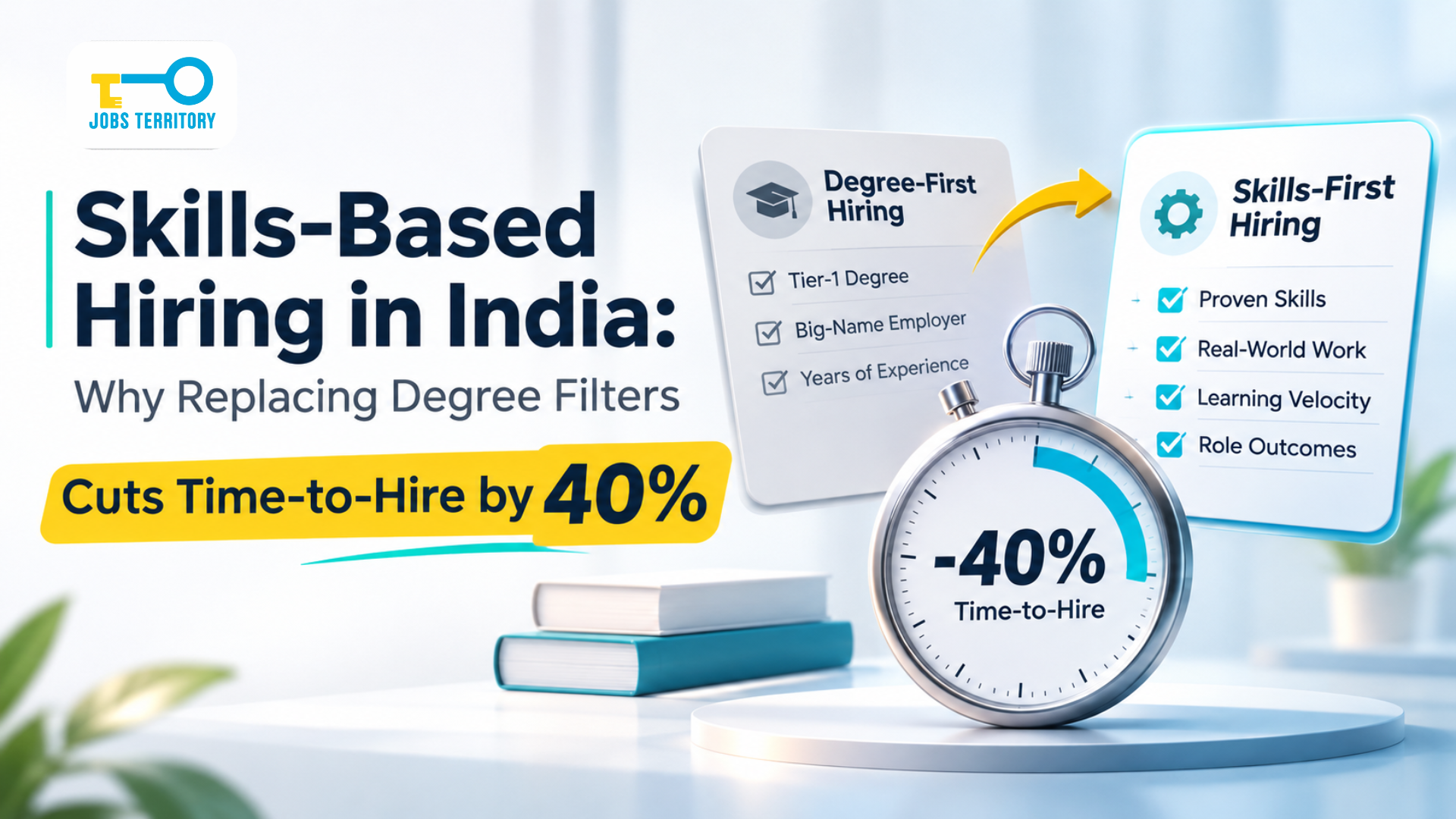
Skills-Based Hiring in India: Why Replacing Degree Filters Cuts Time-to-Hire by 40%
Traditional degree-based hiring is limiting companies from accessing talented candidates. This article explains why businesses should shift towards skills-based hiring by prioritizing practical abilities, real-world experience, learning agility, and structured assessments over degrees and college backgrounds. For companies, this approach can expand the talent pool, improve candidate quality, and reduce hiring delays. Key Message: Hire for skills, not just degrees.
Read Full Article →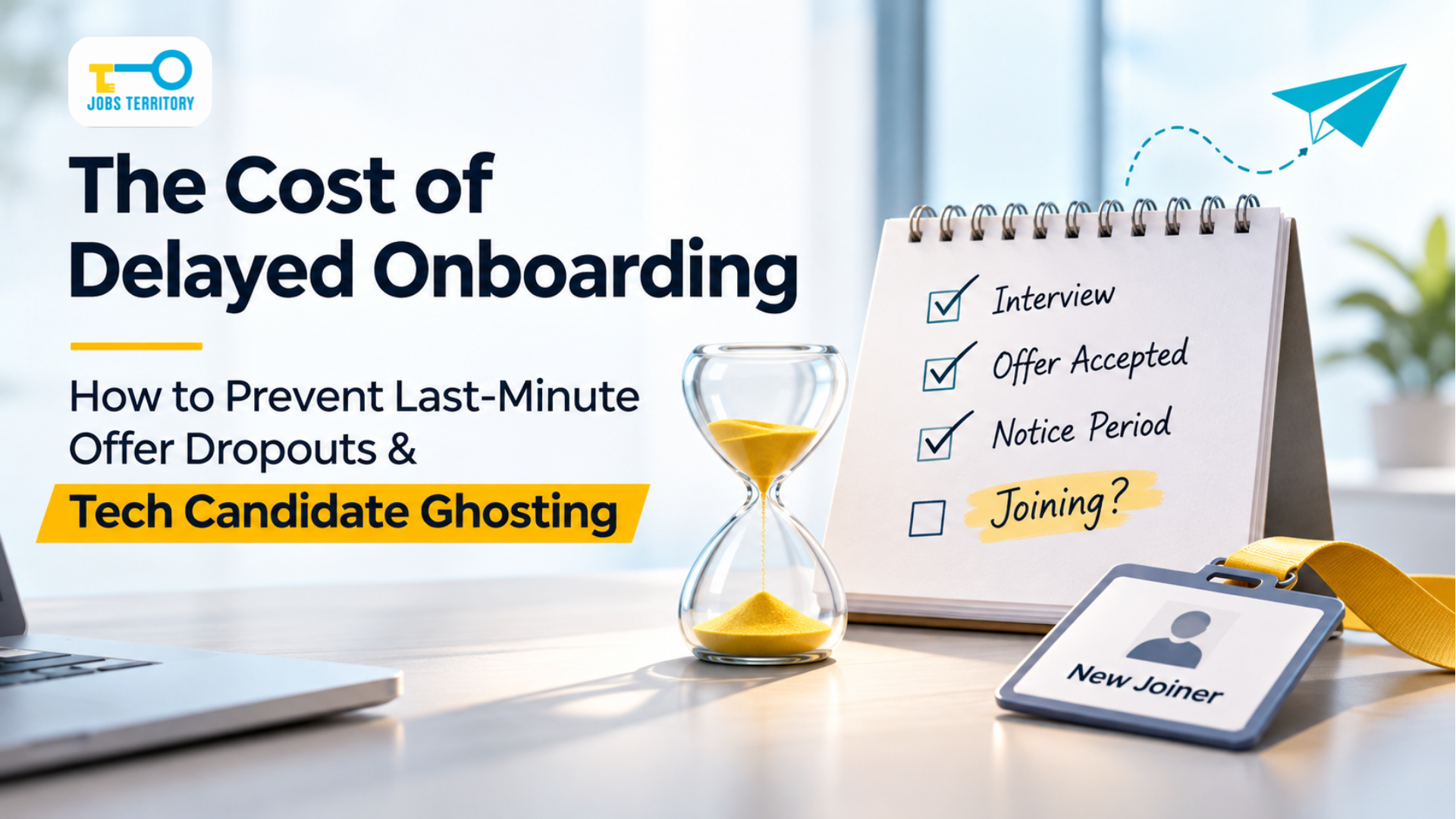
The Cost of Delayed Onboarding: How to Prevent Last-Minute Offer Dropouts & Tech Candidate Ghosting
This article explores why candidates drop out after accepting job offers and how delayed onboarding impacts business operations, project timelines and recruitment costs. It highlights five practical strategies for employers: structured pre-boarding engagement, regular candidate check-ins, early counteroffer risk assessment, faster hiring processes and seamless recruitment-to-onboarding coordination. Key takeaway: Recruitment doesn't end when a candidate accepts an offer. Success means keeping the right talent engaged until Day 1 and ensuring they successfully join the organisation.
Read Full Article →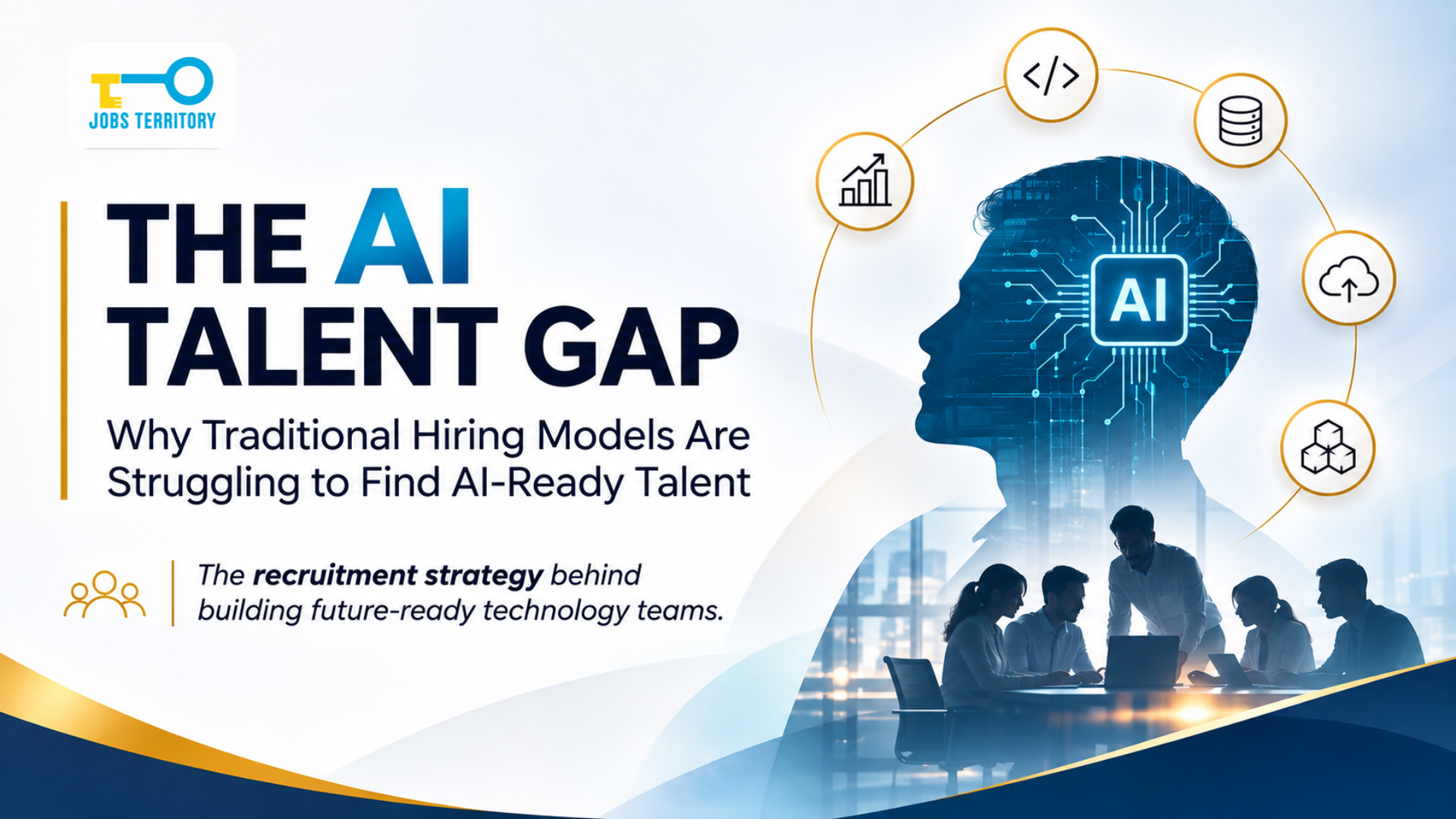
Why Traditional Hiring Models Are Struggling to Find AI-Ready Talent
Traditional hiring models are struggling to keep pace with the growing demand for AI-ready talent. From AI/ML Engineers and Data Scientists to MLOps and Generative AI Specialists, finding the right professionals requires more than resume screening and keyword matching. This article explores the challenges of specialised technology recruitment and five strategies businesses can use to improve talent sourcing, technical evaluation and hiring decisions. Discover how a smarter recruitment strategy can help businesses build future-ready technology teams.
Read Full Article →
The Skills Gap Is Growing: Should Companies Hire for Potential or Experience?
As the skills gap continues to challenge organisations, should companies prioritise experienced candidates or hire for potential? This article explores how hiring managers can balance proven expertise with transferable skills, adaptability, and learning ability. Discover practical ways to define essential skills, assess candidates objectively, and align hiring decisions with current role requirements and future business needs. Jobs Territory believes effective recruitment starts with understanding the skills businesses need today and the talent they will need tomorrow.
Read Full Article →
500 Applications. 0 Joiners. Is Your Hiring Process Broken?
A high number of applications doesn’t always translate into successful hires. Salary mismatches, slow interview decisions, unclear hiring criteria, and candidates dropping out after accepting offers can leave positions vacant despite a busy recruitment pipeline. This article explores the common gaps in the hiring process and the key metrics HR teams should track to improve hiring outcomes. The key takeaway: Successful recruitment isn’t about collecting more CVs—it’s about finding the right talent, making timely decisions, and converting offers into actual joiners.
Read Full Article →
Internal Recruitment Team vs External Recruitment Partner: Which Delivers Better Hiring Results?
Choosing between internal recruitment and an external recruitment partner depends on your hiring needs, team capacity, and business goals. Discover how the right recruitment strategy can help businesses find suitable talent and manage hiring challenges effectively. Jobs Territory — The Right Talent. The Right Recruitment Partner.
Read Full Article →
The Evolution of Recruitment: Why 2026 Belongs to Hybrid AI + Human Intuition Headhunting
By Jobs Territory | Thought Leadership Series Over the past three years, the recruitment industry was caught in an aggressive race to automate everything. From generative AI job descriptions and automated resume parsing to autonomous initial screening bots, the promise was straightforward: faster, cheaper, fully automated hiring.
Read Full Article →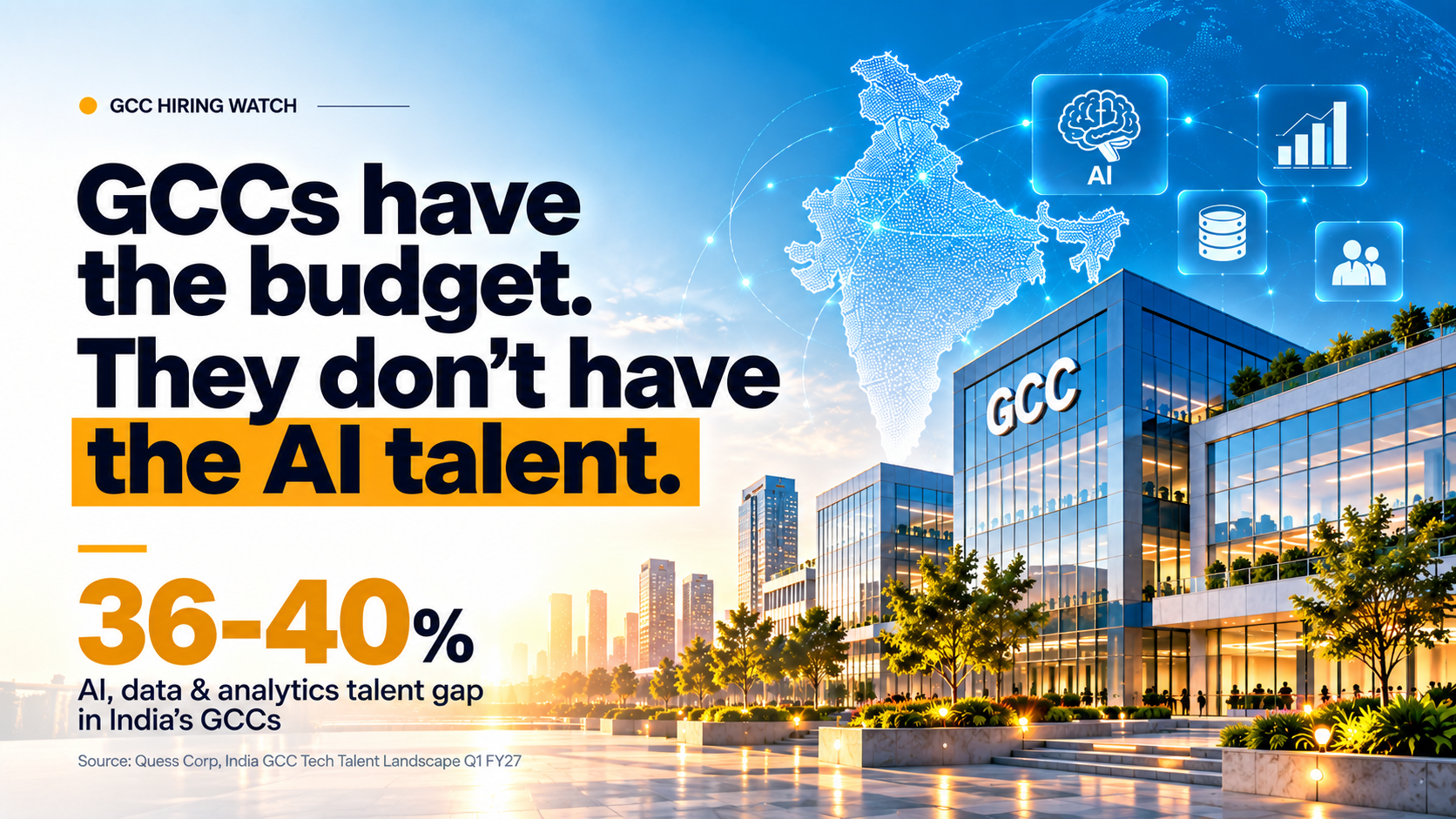
Why GCCs in India Are Struggling to Hire AI Talent (and What Actually Fixes It)
India's GCCs have the budget. So why do AI roles stay open for months? The AI, data and analytics talent gap sits at 36-40%. But the shortage is only part of the problem. The way companies hire makes it worse. In this blog, you'll learn: → Which AI roles are hardest to fill, and why → 3 hiring mistakes slowing GCCs down → What actually fixes it
Read Full Article →
The 70-Day Ghosting Crisis: Why India’s GCCs Are Losing 38% of Top Tech Hires (And How Modern TA Leaders Are Fixing It)
The scenario has played out across executive boardrooms in Bengaluru, Hyderabad, and Pune hundreds of times this year: An Engineering Vice President spends six weeks evaluating a s
Read Full Article →