Why Good Candidates Reject Job Offers
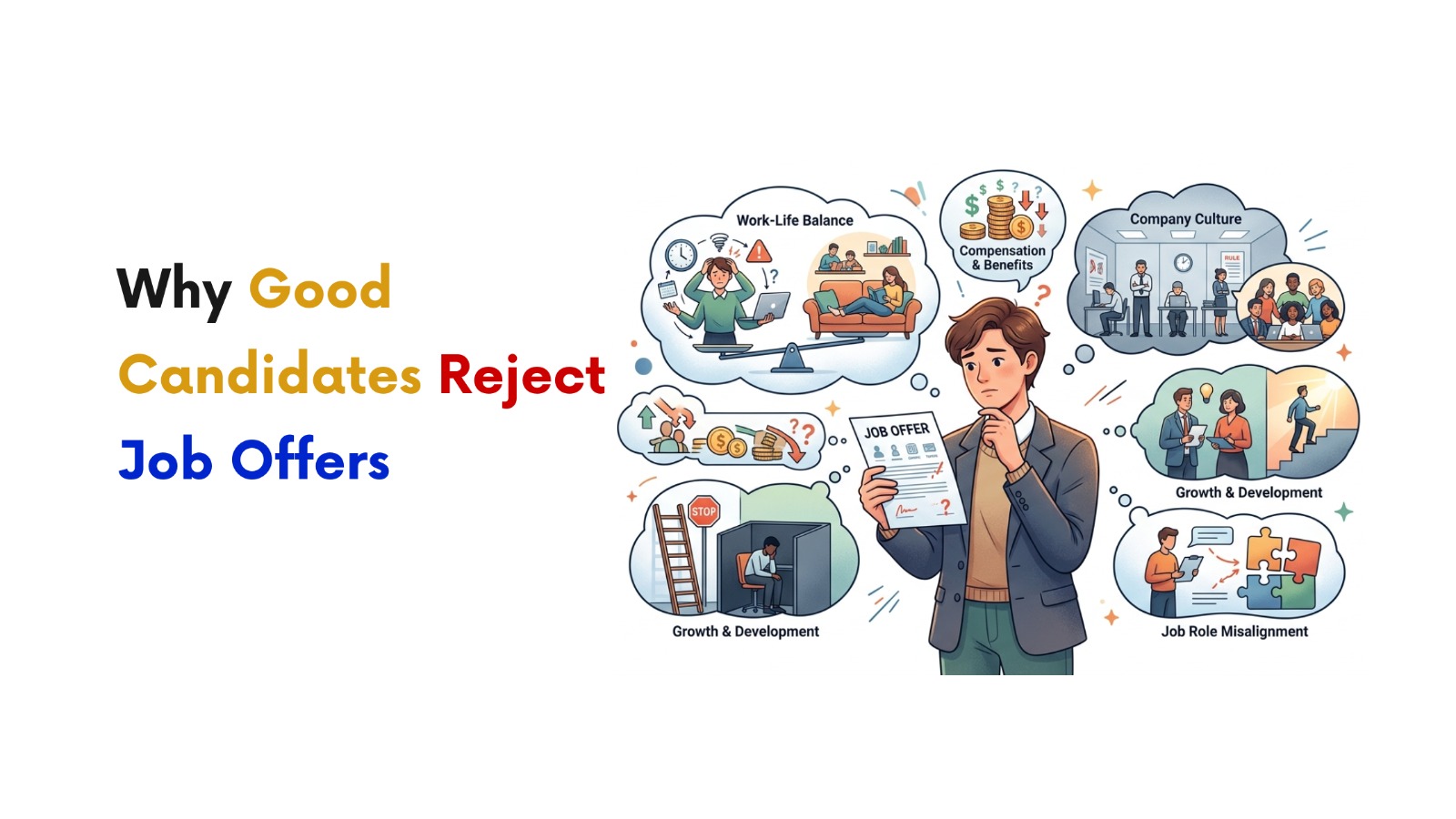
Why Good Candidates Reject Job Offers
Every rejected offer is more than just a missed hire.
It's lost time, increased recruitment costs, project delays, and another opportunity handed to your competitor.
Many organizations believe candidates reject offers because another company offered a higher salary. While compensation plays a role, it's rarely the only reason. Today's professionals evaluate an employer based on the entire hiring experience—from the first interaction to the final offer.
If your company is losing strong candidates at the final stage, the problem may not be the talent market—it may be your hiring process.
In this blog, we'll explore the real reasons candidates reject job offers and how businesses can improve offer acceptance rates.
1. A Slow Hiring Process Drives Candidates Away
Top professionals are often interviewing with multiple companies simultaneously.
When interview rounds are spread over several weeks or decision-making is delayed, candidates naturally accept offers from organizations that move faster.
- Warning signs:
- Long gaps between interview rounds
- Delayed interview feedback
- Waiting weeks for final approval
- Best Practice
Create a structured hiring process with clear timelines. Fast decisions demonstrate professionalism and respect for candidates' time.
2. Poor Candidate Experience Leaves a Lasting Impression
Candidates don't just evaluate the role—they evaluate how they're treated throughout the recruitment journey.
Poor communication, missed interview schedules, unclear expectations, or lack of feedback can create a negative perception before the employee even joins.
A positive candidate experience reflects a strong company culture.
Ask yourself:
- Were interview updates shared on time?
- Was communication clear and professional?
- Did candidates feel valued throughout the process?
Small improvements here can significantly increase offer acceptance rates.
3. The Job Description Doesn't Match the Interview
One of the quickest ways to lose candidate trust is inconsistency.
If the role discussed during interviews differs from the advertised job description, candidates may question transparency within the organization.
Ensure that:
- Responsibilities remain consistent.
- Growth opportunities are explained clearly.
- Reporting structure is transparent.
- Performance expectations are realistic.
Trust is built through clarity.
4. Career Growth Matters More Than Ever
Professionals aren't just choosing a job—they're choosing their next career move.
They want to understand:
- What skills will I gain?
- What does career progression look like?
- Are there leadership opportunities?
- Will I continue learning?
Organizations that communicate clear growth paths are more likely to attract and retain high-performing talent.
5. Employer Brand Influences Every Hiring Decision
Before accepting an offer, candidates research your organization.
They explore:
- LinkedIn presence
- Company website
- Employee reviews
- Leadership visibility
- Social media activity
An inactive or inconsistent employer brand can create uncertainty, while a professional online presence builds credibility and confidence.
Your reputation often influences hiring decisions before interviews even begin.
6. Compensation Is About More Than Salary
While salary remains important, candidates increasingly evaluate the complete value proposition.
They compare:
- Learning opportunities
- Flexible work arrangements
- Health and wellness benefits
- Recognition programs
- Company culture
- Long-term stability
A compelling overall package often outweighs a marginal salary difference.
7. Lack of Transparency Creates Doubt
Candidates appreciate honesty.
Unexpected interview rounds, hidden responsibilities, unrealistic expectations, or last-minute changes can reduce confidence in the organization.
Clear communication from the beginning helps build stronger relationships and increases the likelihood of offer acceptance.
How Companies Can Improve Offer Acceptance Rates
Organizations that consistently hire top talent often share these practices:
✔ Keep hiring timelines short and efficient.
✔ Communicate regularly throughout the recruitment process.
✔ Provide a positive and professional candidate experience.
✔ Clearly explain responsibilities and career progression.
✔ Build a strong employer brand.
✔ Present competitive and transparent offers.
✔ Partner with experienced recruitment specialists to identify and engage the right talent faster.
How Jobs Territory Helps Businesses Hire Better
Finding exceptional talent isn't simply about posting vacancies—it's about creating a hiring experience that attracts professionals who are ready to join and stay.
@Jobs Territory, we help organizations streamline recruitment by identifying qualified candidates, reducing hiring timelines, improving candidate engagement, and supporting businesses throughout the hiring journey.
Our goal is simple: help companies hire the right people, faster, while delivering a professional experience for every candidate.
Whether you're expanding your team, filling critical roles, or scaling your workforce, our recruitment experts are here to support your hiring success.
Final Thoughts
When strong candidates decline your offer, it's an opportunity to evaluate and strengthen your hiring strategy.
The organizations that consistently attract top professionals aren't always those offering the highest salaries—they're the ones delivering a faster, transparent, and candidate-focused hiring experience.
By refining your recruitment process and partnering with the right hiring experts, you can reduce offer rejections and build stronger teams for long-term success.
Let’s Connect
📩 E-mail : careers@jobsterritory.com
🌐 Visit : https://jobsterritory.com
📞 Connect on WhatsApp : https://wa.me/message/KBCNOEVTIRBDC1
More articles